What do the Christmas words in the Bible mean?
Most Christmas words come straight from Luke 1-2 and Matthew 1-2: Immanuel means “God with us,” Christ and Messiah both mean “anointed,” a manger is a feeding trough, the heavenly host is an army of angels, and the Magi were learned men from the east. A few, like Advent and Epiphany, are church words, not Bible words. Each entry below gives the plain meaning, the original word, the verse it comes from, and a label for how sure we are.
Updated November 2026 · Verses quoted from the World English Bible (public domain) · Original-language notes from Blue Letter Bible's Strong's lexicon
The Christmas glossary: 14 words, plain English
Labels, the same ones Wayfold uses: In the text means the verse says it; History is background from sources; Interpretation and Debated mean readers differ; Tradition means the church added it later.
- AdventLatin adventusTradition
“Coming.” The church season of preparation before Christmas, which also looks ahead to Christ's return. The word itself isn't in the Bible; the season is a church tradition. In 2026 it begins Sunday, November 29.
Source: Britannica, Advent
- Annunciationfrom Luke 1In the text
The angel Gabriel's announcement to Mary that she would bear a son and name him Jesus. The name for the scene is traditional; the scene is Luke 1:26-38.
“Behold, you will conceive in your womb and give birth to a son, and shall name him ‘Jesus.’” Luke 1:31, WEB
- Immanuel (Emmanuel)Hebrew ‘Immanu’elIn the text
“With us is God.” First a sign-name in Isaiah 7:14; Matthew applies it to Jesus and translates it for his readers.
“Behold, the virgin shall be with child, and shall give birth to a son. They shall call his name Immanuel,” which is, being interpreted, “God with us.” Matthew 1:23, WEB
Source: BLB lexicon H6005
- MessiahGreek Messias, from Hebrew mashiachIn the text
The Anointed One: the promised king. The Greek form appears only twice in the New Testament, both in John.
He first found his own brother, Simon, and said to him, “We have found the Messiah!” (which is, being interpreted, Christ). John 1:41, WEB
Source: BLB lexicon G3323
- ChristGreek ChristosIn the text
Not a surname. It means “anointed,” the Greek equivalent of Messiah. The angels use it on the first night.
“For there is born to you today, in David’s city, a Savior, who is Christ the Lord.” Luke 2:11, WEB
Source: BLB lexicon G5547
- BethlehemHebrew Bet LehemHistory
“House of Bread.” A town in the Judaean Hills about 5 miles (8 km) south of Jerusalem, the home of King David, which is why Luke calls it “David's city.”
“But you, Bethlehem Ephrathah, being small among the clans of Judah, out of you one will come out to me who is to be ruler in Israel.” Micah 5:2, WEB
Source: Britannica, Bethlehem
- Census (enrollment)Luke 2:1-2Debated
A registration ordered by Caesar Augustus, the reason Joseph travels from Nazareth to Bethlehem. Its exact date is debated by historians.
“Now in those days, a decree went out from Caesar Augustus that all the world should be enrolled.” Luke 2:1, WEB
- Swaddling clothesKJV wording, Luke 2:7In the text
Strips of cloth wrapped snugly around a newborn. The World English Bible says “bands of cloth.” The angels give it to the shepherds as part of the sign.
“This is the sign to you: you will find a baby wrapped in strips of cloth, lying in a feeding trough.” Luke 2:12, WEB
- MangerGreek phatnēIn the text
A feeding trough for animals. All four New Testament uses are in Luke: three at the birth, and once for an ox's stall (13:15). No stable is named.
“She wrapped him in bands of cloth and laid him in a feeding trough, because there was no room for them in the inn.” Luke 2:7, WEB
Source: BLB lexicon G5336
- InnGreek katalymaInterpretation
A lodging place. The same word is the “guest room” of the Last Supper (Luke 22:11), so many scholars picture a full guest room in a family house rather than a commercial inn.
‘Tell the master of the house, ‘The Teacher says to you, “Where is the guest room, where I may eat the Passover with my disciples?”’’ Luke 22:11, WEB
Source: BLB lexicon G2646
- Heavenly hostGreek stratiaIn the text
An army. In Luke 2:13 it's an army of angels, and what the army does is sing praise.
“Suddenly, there was with the angel a multitude of the heavenly army praising God.” Luke 2:13, WEB
Source: BLB lexicon G4756
- Magi (wise men)Greek magosTradition
Learned men “from the east” who say they saw “his star” (Matthew 2:2). Matthew gives no number and doesn't call them kings; tradition settled on three, probably from the three gifts.
“Now when Jesus was born in Bethlehem of Judea in the days of King Herod, behold, wise men from the east came to Jerusalem.” Matthew 2:1, WEB
Source: BLB lexicon G3097; Britannica, Magi
- FrankincenseMatthew 2:11History
An aromatic gum resin from Boswellia trees, burned as incense and valued in ancient worship. A gift suited to worship.
“Opening their treasures, they offered to him gifts: gold, frankincense, and myrrh.” Matthew 2:11, WEB
Source: Britannica, frankincense
- MyrrhGreek smyrnaIn the text
A bitter, costly resin used in perfume and in embalming. It appears only twice in the New Testament: at the birth, and at the burial.
“Nicodemus, who at first came to Jesus by night, also came bringing a mixture of myrrh and aloes.” John 19:39, WEB
Source: BLB lexicon G4666
Short version: almost every word on a Christmas card is in Luke or Matthew, but the number three, the stable and the kings' crowns are not.
Where these words live in Wayfold
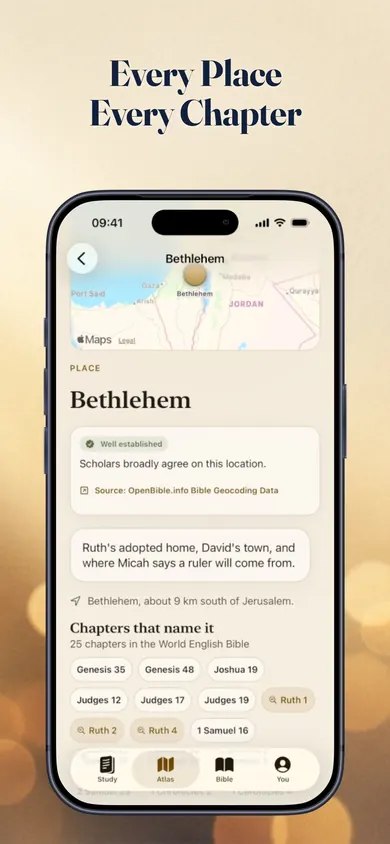
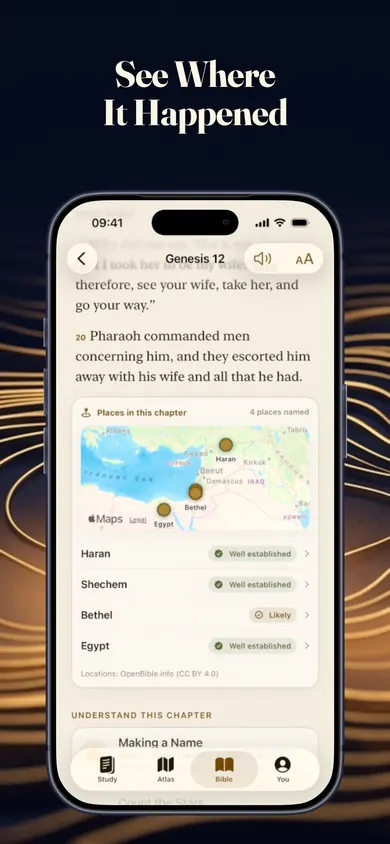
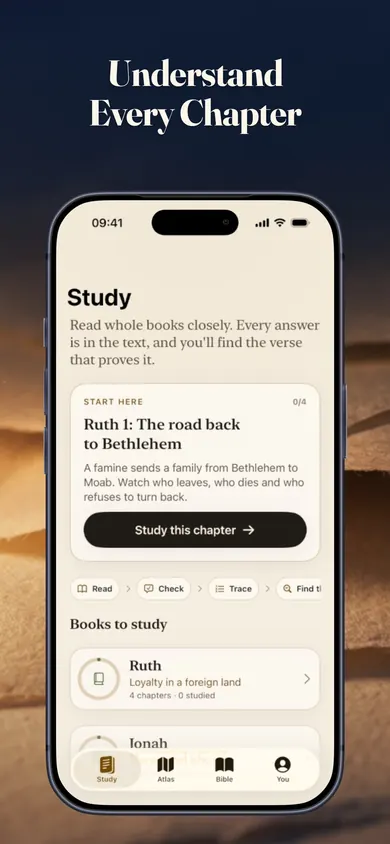
We make Wayfold. It doesn't have a Christmas study (the six study books are Ruth, Jonah, Philippians, James, Habakkuk and Philemon), but the free reader has Luke 2 and Matthew 2, and the map shows every place they name.
“Mom, what's a host?”
A composite scene, not a testimonial
Why does the song say the angels are a host? Are they having a party?
Good question. “Host” is an old word for an army. Luke says a whole army of angels showed up, and instead of fighting, they sang.
An army that sings?
Look, Luke 2:13: “a multitude of the heavenly army praising God.”
That's the whole idea of a glossary like this: the answer to a seven-year-old's question is usually one sentence and one verse, and the verse is more interesting than the carol.
Who this glossary (and Wayfold) is not for
If you want full word studies with every Greek form, use a lexicon or a commentary; we link the ones we used. If you want a daily Christmas devotional with reflections and prayers, this isn't it, and Wayfold isn't a devotional app either. Wayfold is for reading a chapter closely: what happens, in what order, where, and which words prove it.
Questions about Christmas words
What does Emmanuel mean in the Bible?
"God with us." Matthew 1:23 translates it himself: the name Immanuel is, "being interpreted, God with us" (World English Bible). The Hebrew name first appears in Isaiah 7:14.
What is the difference between Messiah and Christ?
None in meaning. Messiah comes from Hebrew and Christ from Greek; both mean "anointed." John 1:41 puts them side by side: Andrew tells his brother he has found "the Messiah," and John adds that it is, "being interpreted, Christ."
What does manger mean in the Christmas story?
A feeding trough for animals. The Greek word, phatne, appears four times in the New Testament, all in Luke. Luke mentions the trough three times in the birth story; he never mentions a stable.
What are swaddling clothes?
Strips of cloth wrapped around a newborn. It is the King James wording of Luke 2:7; the World English Bible says "bands of cloth." In Luke 2:12 the angel makes it part of the sign to the shepherds.
Is the word Advent in the Bible?
No. Advent comes from the Latin adventus, "coming," and names the church's season of preparation before Christmas. In 2026 it starts on Sunday, November 29.
What does heavenly host mean?
An army of angels. The Greek word stratia means an army; in Luke 2:13 "a multitude of the heavenly army" appears and praises God.
Does Wayfold explain Bible words?
Yes. Wayfold has 113 plain-English notes on words like covenant, tabernacle and Son of Man, tappable inside the reader. The complete World English Bible reader is free; some notes sit in study books and background lessons that need Premium Lifetime.
How to use this glossary in 3 steps
- Pick your situation in the chat at the top. You'll get the three words most worth knowing first.
- Read the verse, not just the meaning. Every entry quotes its verse; reading it in context takes under a minute.
- Open the chapter. Read Luke 2 or Matthew 2 in full, in the free Wayfold reader or any Bible, and notice the words as they come.
Check yourself: four carol lines, decoded
Tap a line to see which Bible word sits behind it.
Immanuel: “God with us,” Matthew 1:23 and Isaiah 7:14.
Manger: a feeding trough, Luke 2:7. Luke never mentions a stable.
Host: an army, Luke 2:13. An army of angels, praising God.
Magi: Matthew says “wise men from the east,” with no number and no crowns. Three and kings are tradition.
Honest limits
Lexicon definitions are summaries; scholars discuss several of these words at length, especially “inn.” Wayfold's free tier covers the Ruth and Jonah studies, the complete reader with read-aloud and search, the map with all 64 places, the timeline, 4 of the 10 journeys and 7 of the 63 background lessons. Premium Lifetime is one optional purchase for the rest. One design decision we made: Wayfold never paraphrases Scripture. Verses are quoted word for word and every explanation is labeled.
Make it a habit with Wayfold
Read Luke 2 tonight in the free reader. Then open the map and find Bethlehem, about 5 miles south of Jerusalem.

Related
- The Christmas story in the Bible, in orderThe Christmas story in the Bible in order: 8 scenes from Luke and Matthew with verses, word counts and a Dec 18-25, 2026 reading plan.
- Wayfold: chapter-by-chapter Bible studyRead a chapter, answer questions, then see the exact verse behind each answer. Ruth and Jonah studies and leader guides are free on iPhone.
- Best Bible study method for small groups: 4 compared on one passageSOAP, inductive, Discovery Bible Study or question-and-proof? All four worked on Jonah 1:1-3, with prep time and the group each one suits.
- How long to read the Bible: book-by-book calculatorHow long does it take to read the Bible? About 53 hours silently. Pick any book, your pace and minutes a day to see your finish date. Free.